
Safe Systems of Work Are Not the Same as Method Statements
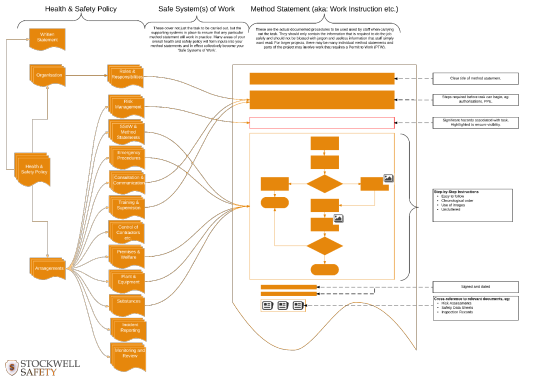
There can sometimes be confusion between Safe Systems of Work (SSoW) and method statements. The two terms often get used interchangeably. But they are actually two different things.
Method Statements
These are step-by-step, documented procedures that explain how to perform tasks safety. They are intended to be used by those people actually carrying out the work. Therefore, they should be as user-friendly as possible and not crammed with useless information or technical jargon. If they are, they are very likely to be ignored. Some organisations don’t use the term ‘method statement’ and might instead refer to them as 'work instructions’. Here’s how the Health and Safety Executive (HSE) define method statements…
“…describe in a logical sequence exactly how a job is to be carried out in a safe manner and without risks to health. It includes all the risks identified in the risk assessment and the measures needed to control those risks. This allows the job to be properly planned and resourced.”
Safe Systems of Work
In order to produce and implement a method statement (aka: work instruction), you’re going to need to…
- carry out a risk assessment
- provide training
- purchase the correct equipment
- maintain said equipment
- supervise staff to ensure they follow the use the method statement
- have emergency procedures in case things go wrong
- etc. etc.
Without these things in place, the method statement is not going to be of any use. These are the 'Systems or Work’. They form inputs into the method statement, but there is no need to duplicate them within the method statement.
Take a look at our graphic for a visual representation of how these two areas of health and safety integrate with each other and the broader health and safety policy.
We hope you find it useful.
Please feel free to share.